
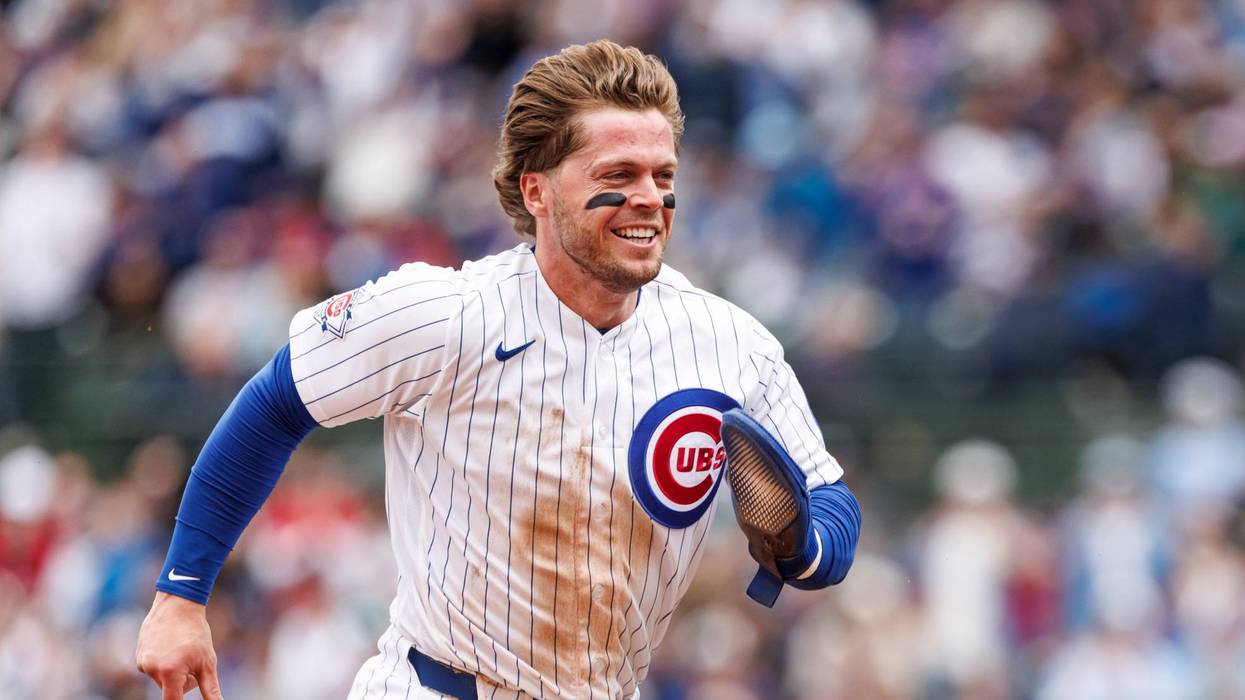
Bottom of the ninth. One of the fastest runners in baseball is standing on third base. One of the best contact hitters in all of baseball is standing in the box. There’s one out in a one run situation. You’re the manager; what do you do here?
For context, we’re talking about Pete Crow-Armstrong and Nico Hoerner. There’s really only three options to choose from. Pitching to Hoerner, choosing to work around him in the hope that you can induce weak contact, or walking him outright. This situation has not only happened once, but twice this year, and the average temperature in Chicago is still in the 40s. It’s early.
Both managers opted to pitch to the Cubs’ second baseman; fateful decisions in each case. On April 19th, the Mets chose to pitch to Hoerner with one out in the bottom of the 10th inning. In this situation, Michael Busch was on deck and carried a .278 xwOBA into the game. Nico hit a sac-fly to right field on the first pitch he saw, a 93 MPH fastball on the outer third. PCA scored standing up. Ballgame.
On May 4th, a similar situation arose against the Reds. Winning by one run with one out in the bottom of the ninth, Cincinnati also chose to pitch to Hoerner instead of working around him. Hoerner pulled another first-pitch fastball to left field for yet another sac-fly to tie the game. PCA scored standing up, again. With one out, Matt Shaw was standing on deck. He carried a .200 BARISP into the game, a far cry from his .278 season average. Another option to hit was Michael Conforto, another bench player who hadn’t taken an at-bat since April. Although working around Hoerner in this case may not have helped, as Conforto hit a walk-off home run in the next at-bat. It just wasn’t the Reds’ night.
Regardless, why are Carlos Mendoza and the esteemed Terry Francona choosing to pitch to Nico Hoerner in the first place? Wouldn’t it make more sense to walk him in an attempt to get the next batter to ground into a double play to end the inning/game? In the Mets’ case, Mendoza stated after the game that there was absolutely no consideration given to walking Hoerner. The Mets’ manager feared that Hoerner would just end up stealing second base. Okay… and? PCA is still standing on third base in a tie ballgame. Sure, Hoerner stealing second would remove the prospect of turning a double play, but it’s not like he represents the winning run. In my opinion, the Mets would have been better off attacking Michael Busch (who was struggling mightily at that point in time), even with Nico standing on second. In the Reds’ case, things are a little different. Hoerner represented the winning run, and I can understand opting not to put the winning run on base intentionally. In order to make sense of these managerial decisions, let’s look at some metrics.
There’s not much analysis to do about PCA’s speed; he’s fast, very fast, 93rd percentile fast. If there’s a ball hit into the outfield, it’s almost a guarantee that Crow-Armstrong will score. But what about Hoerner? Is he really that good in these situations? The numbers say yes.
The second baseman is batting .289 with runners in scoring position this year, driving in 22 runs in 45 plate appearances. Last year, his numbers were even better. In 2025, Hoerner’s batting average was an incredible .371 with runners in scoring position. He drove in 51 runs in 172 plate appearances and he drew a walk almost as often as he struck out (16 walks vs. 18 strikeouts). In 2024 his numbers were slightly more digestible for opposing managers (.246 BARISP), but he posted a .302 batting average with runners in scoring position in 2023.
Over his entire career with the Cubs, Hoerner has posted a .315 BARISP. In fact, in the last three years combined only eight hitters in all of baseball have posted a higher BARISP than Hoerner (sample size >400 PA). That list of hitters includes the likes of Aaron Judge, Mookie Betts, and Freddie Freeman; the best of the best. Since Hoerner entered the league in 2019, he again ranks 8th in baseball in BARISP (sample size >700 PA). In essence, pitching to Nico Hoerner with runners in scoring position doesn’t seem like the best decision a manager could make, particularly when the game is on the line.
These decisions are compounded by the fact that the men standing in the on-deck circle seem to be better hitters to attack in these situations. Michael Busch was on deck against the Mets, and he has struggled mightily to start the season. In the Reds’ case, Michael Conforto is a bench player with less than 40 PAs all season. Conforto is a career .255 hitter with runners in scoring position as well. If Shaw were to have stayed in the game, his career BARISP is a measly .180 and he struggles against right handed pitching. These seem like better options to attack than a guy with one of the best bat-to-ball skills in the majors.
I understand that I’m not a big league manager, but the choice here seems simple. Under almost no circumstances does it seem like the right decision to pitch to Nico Hoerner when one of the fastest men in baseball is 90 feet from scoring and the game is on the line. Work around him, walk him outright, or pray to whatever deity you believe in. All of these options seem to have better outcomes than allowing Hoerner to make contact and drive in the decisive run. As I stated previously, it’s still early in the season and there’s a lot of baseball left to be played. This situation has already happened twice this season and I imagine that it will happen again before October arrives. Will the league adjust? Or will they keep pitching to a man that thrives in high leverage situations?
All statistics and metrics were pulled from FanGraphs, Baseball Reference, and Baseball Savant unless otherwise noted

Leave a comment